Look, mom, a critter!
How a phrase said by a child in a park in Rio Branco became a game published on Google Play and the App Store. The first post in the behind-the-scenes series about Olha o Bichim!.
 Giuliano Cardoso · · 6 min read
This is the first of five posts in the behind-the-scenes series about Olha o Bichim! ("Look at the critter!"), the game my wife, Risoleta, and I made at home. Here I tell where the idea came from; in the next ones, how it became software.
I had wanted to make a game again for a long time. The last time had been years ago, and I had never made one for smartphones, so when I decided to recreate, in a stylized way, 2048, the puzzle where you slide tiles and two equal ones merge and double in value, it was exactly the challenge I was looking for. But I had the technical side and nothing else; the game was missing its soul. That's when I asked Risoleta to define the setting.
The phrase that became a name
Risoleta walks in Parque Ipê, here in Rio Branco, and one day she saw a small child, holding her mother's hand, stop enchanted in front of a family of capybaras. The child pointed and said: "Olha, mãe, o bichinho!" ("Look, mom, the critter!").
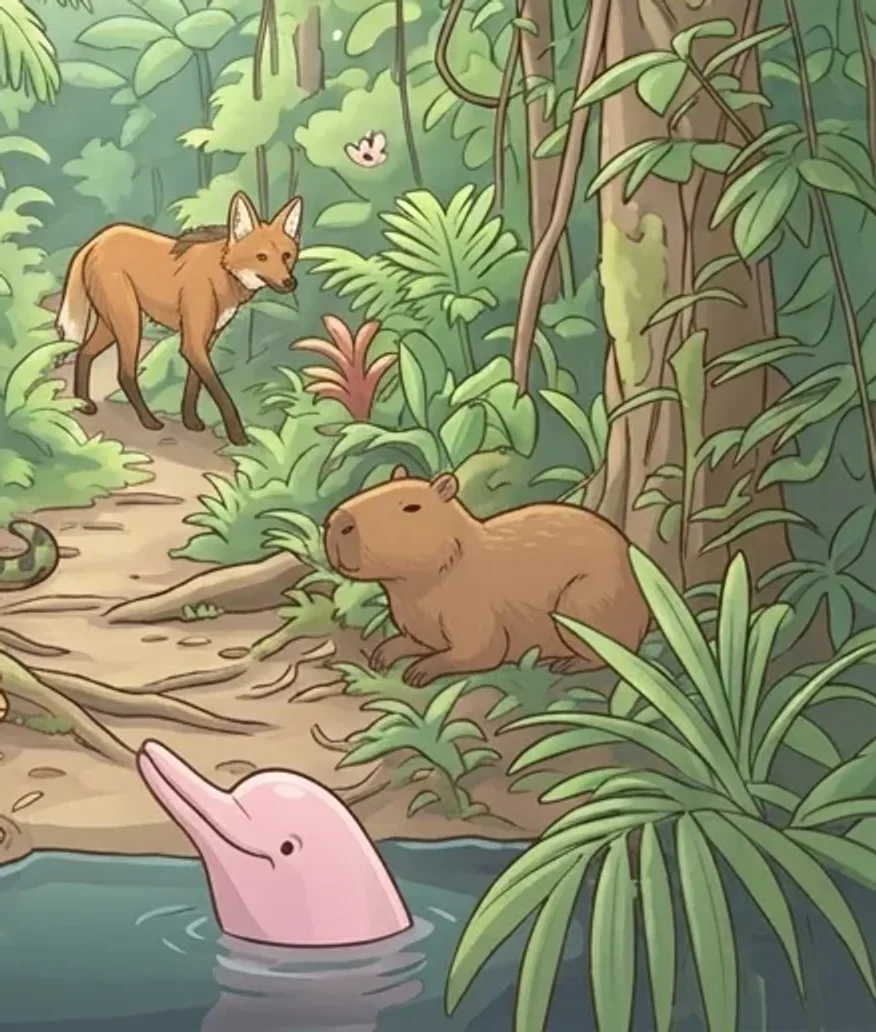
The phrase kept ringing in her head, and when I showed up talking about a game, it came right back. It became the name, Olha o Bichim!, and also the concept: each 2048 number becomes an animal from Brazilian fauna.
From numbers to animals
It looks like just a reskin, but it isn't. When you swap 2, 4 and 8 for a leafcutter ant queen, a maned wolf and a cane toad, the game changes audience. A child who can't read or add yet can play, because they only need to match two identical pictures.
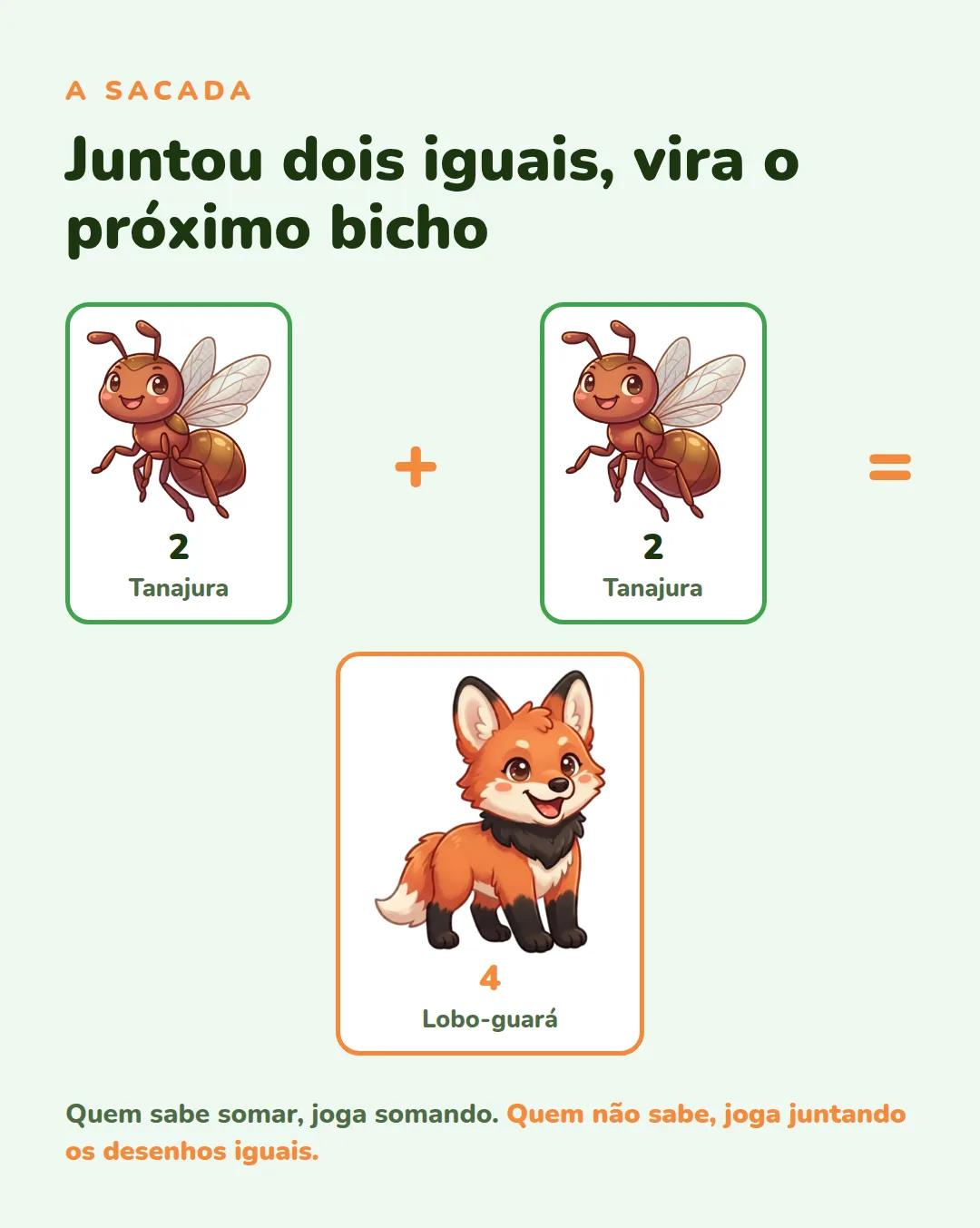
Risoleta put it better than I could to g1 (in Portuguese): "Those who can add play by adding. Those who can't, play by matching, putting the identical pictures together." And those who know math still see the progression 2, 4, 8, 16… right there, beneath the animals. Two layers on the same board.
The 14 animals
The choice of animals was deliberate, not a random list of cute critters. The capybara had to be the legendary one, the 2048 tile; after all, in Risoleta's words, "the capybara is the queen of the moment!". The manatee made it in because it is endangered and is an animal almost no child sees in person. The maned wolf, because it is still little known, despite being on the R$ 200 bill.
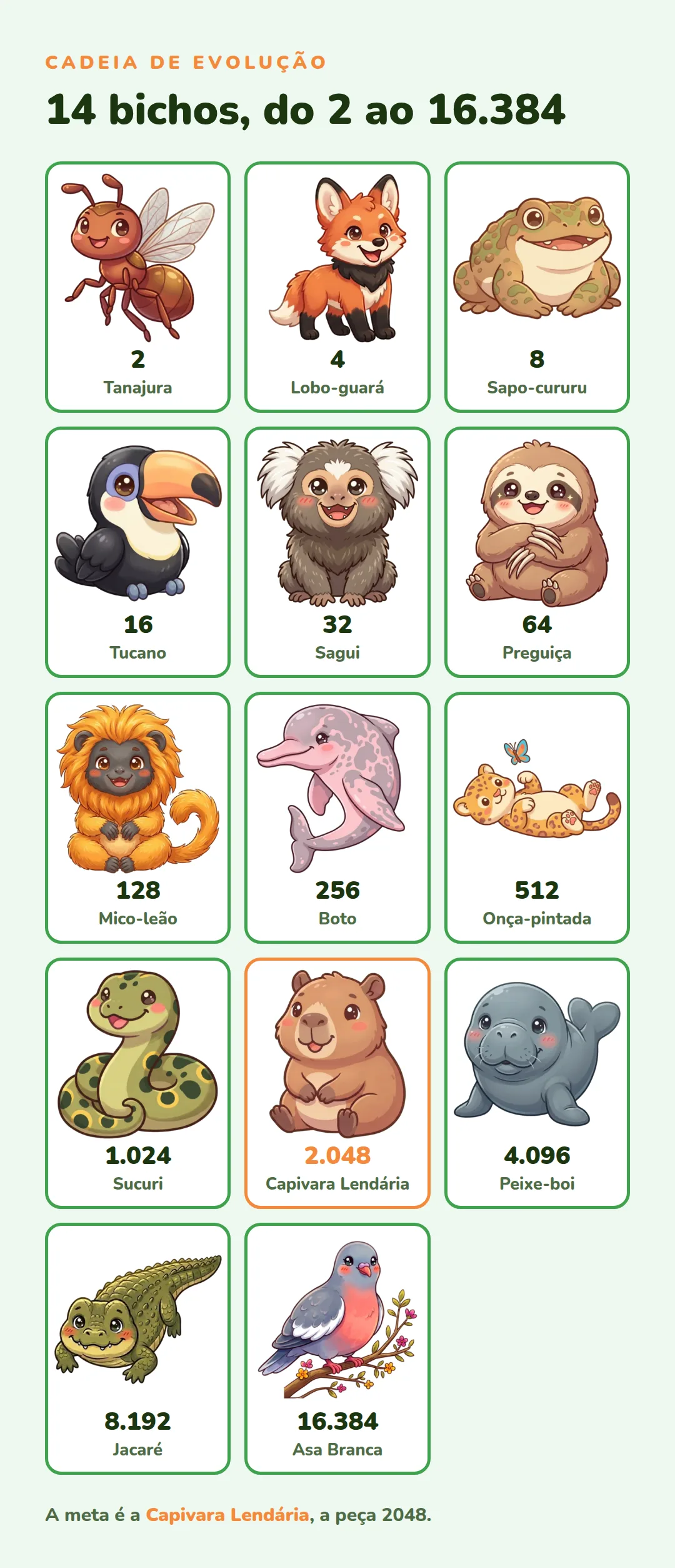
The game was born capped at 2048, gained the Manatee and the Caiman in the second week, and in September the Asa Branca (picazuro pigeon), level 14, the 16,384 tile. Each animal has a card in the Collection with fun facts and the species' conservation status, and it didn't take long for teachers to start recommending the game for math (exponents, geometric progression), biology and geography classes.
The drawings were made by Risoleta with generative AI, but with a lot of human eye. The hardest was the pink river dolphin, because the AI insisted on painting a bubblegum-pink dolphin, when in fact its skin is transparent in places and what we see is the color of its blood vessels. It took many tests and prompts to get there.
Who did what
And here comes the part that, as I see it, is the most interesting in the project and the reason this series exists.
Risoleta took care of the theme, the animals, the rules, the coin system, the items, the leaderboard idea, the drawings and the educational cards, and to this day she plays every week, competing on the leaderboard. I took the architecture, the programming, the infrastructure and publishing to the stores. And there is a third column: much of the code was written by AI agents, in this case Claude Code.
Before anyone thinks it was enough to ask "make an animal game" and wait, let me say right away that it wasn't like that. In practice, I became a sort of technical director of a team of agents, and that only worked because there was a lot of method behind it, which is the subject of the next posts. In fact, anyone who read my post Would you see a doctor who is wrong 30% of the time? knows I don't blindly trust AI, and the whole method was built precisely on top of that distrust.
The numbers
The first commit was on April 25, 2026. By mid-October, there were:
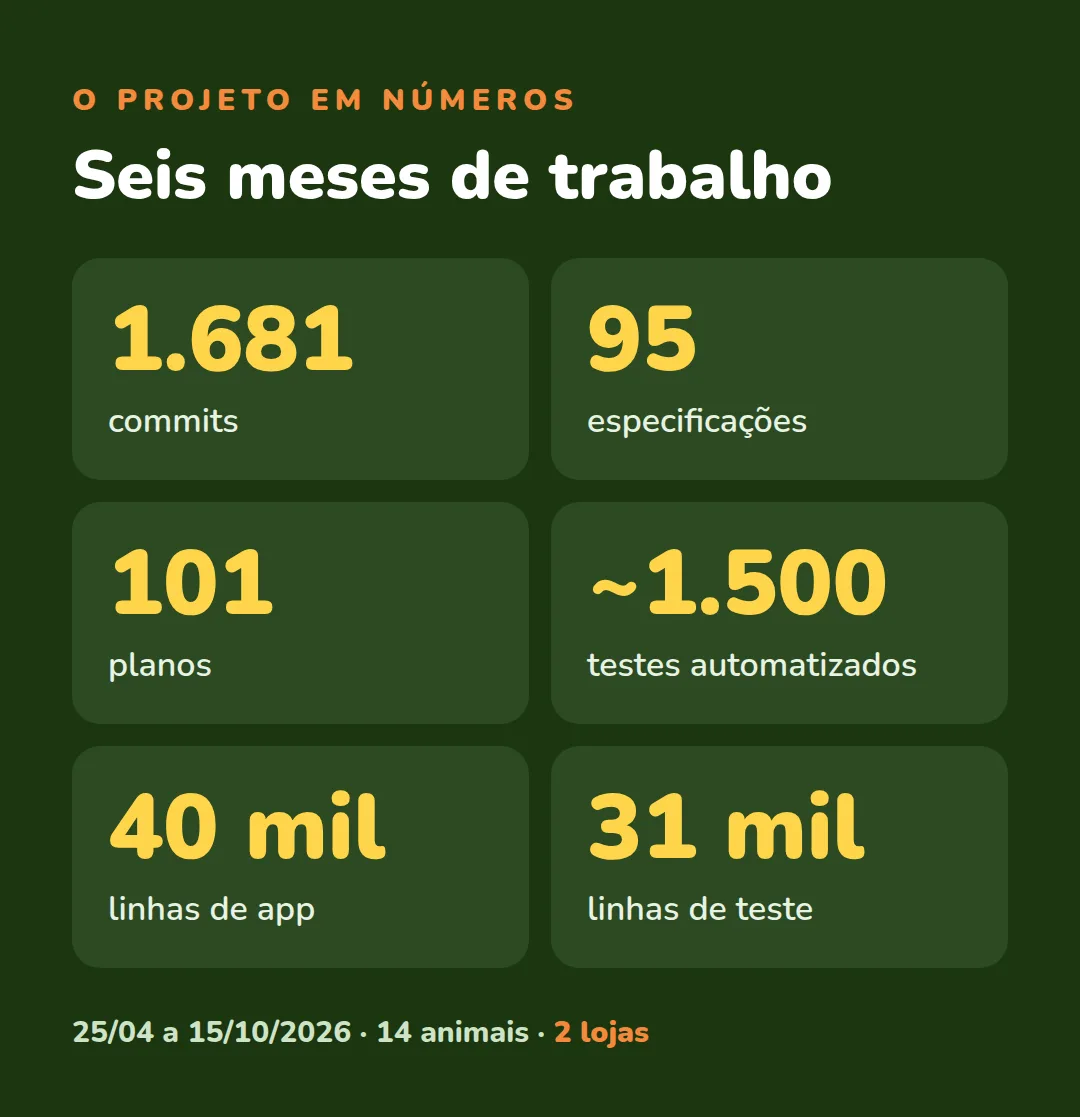
- 1,681 commits, with May the most intense month, at 543;
- 95 design specs and 101 implementation plans;
- about 40 thousand lines of code in the app and 31 thousand lines of tests, with some 1,500 automated tests;
- 14 animals and two stores, Google Play (in production since July 3) and the App Store (since July 20).
Notice the ratio between test code and app code, almost one line of test for each line of code. That is no accident; it is a direct consequence of the process, and I come back to it in the third post.
All made at home, under the Catraia Games brand, with no sponsorship, self-funded, a test team made up of friends (and their kids, who were the most honest critics) and word-of-mouth promotion. The game can be finished without any purchase and works offline, so you can play it in the countryside, at the cassava flour mill or on the town square bench where the signal is weak.
The response
In August, the game was featured on ac24horas, g1 Acre, Nortícia, Boa Noite Rio Branco and later Jornal do Acre (all in Portuguese). At the first report, there were 115 active accounts, all won by word of mouth.
The themes that kept coming up in the stories were the Parque Ipê scene, the inclusion of children who can't read yet, and environmental education, which made me very happy, because that was exactly what we wanted the game to be.
All this material became a talk, "Inspiring Case: when an idea becomes technology", and the slides illustrating this series came from it. In the next post, I talk about how it all started with a document, before a single line of code, and why that made the AI work for our vision instead of improvising.
If you want to try the game, it is free on Google Play and the App Store, with more details at olhaobichim.com.br.